Bitterne Manor Primary School
PSHE
 Curriculum Intent
At Bitterne Manor Primary School we are committed to ensuring that the emotional and social needs of all our children are met within our school environment, and we support the development of children’s health, wellbeing, self-esteem and confidence. We ensure that young people are equipped with the knowledge and skills that enable them to feel confident and prepared for making life choices, taking on new challenges and managing risks that they may face.
Pupils learn about themselves as growing and changing individuals, acquiring the knowledge, understanding and skills they need to manage their lives now and in the future. They develop their sense of social justice and moral responsibility and understand how their own choices, through the conscious application of our learning values and British values, can impact across all communities in which they belong. Our curriculum builds on prior knowledge and equips pupils with the understanding, skills and strategies required to live healthy, safe, productive, capable, responsible and balanced lives.
 Curriculum Implementation
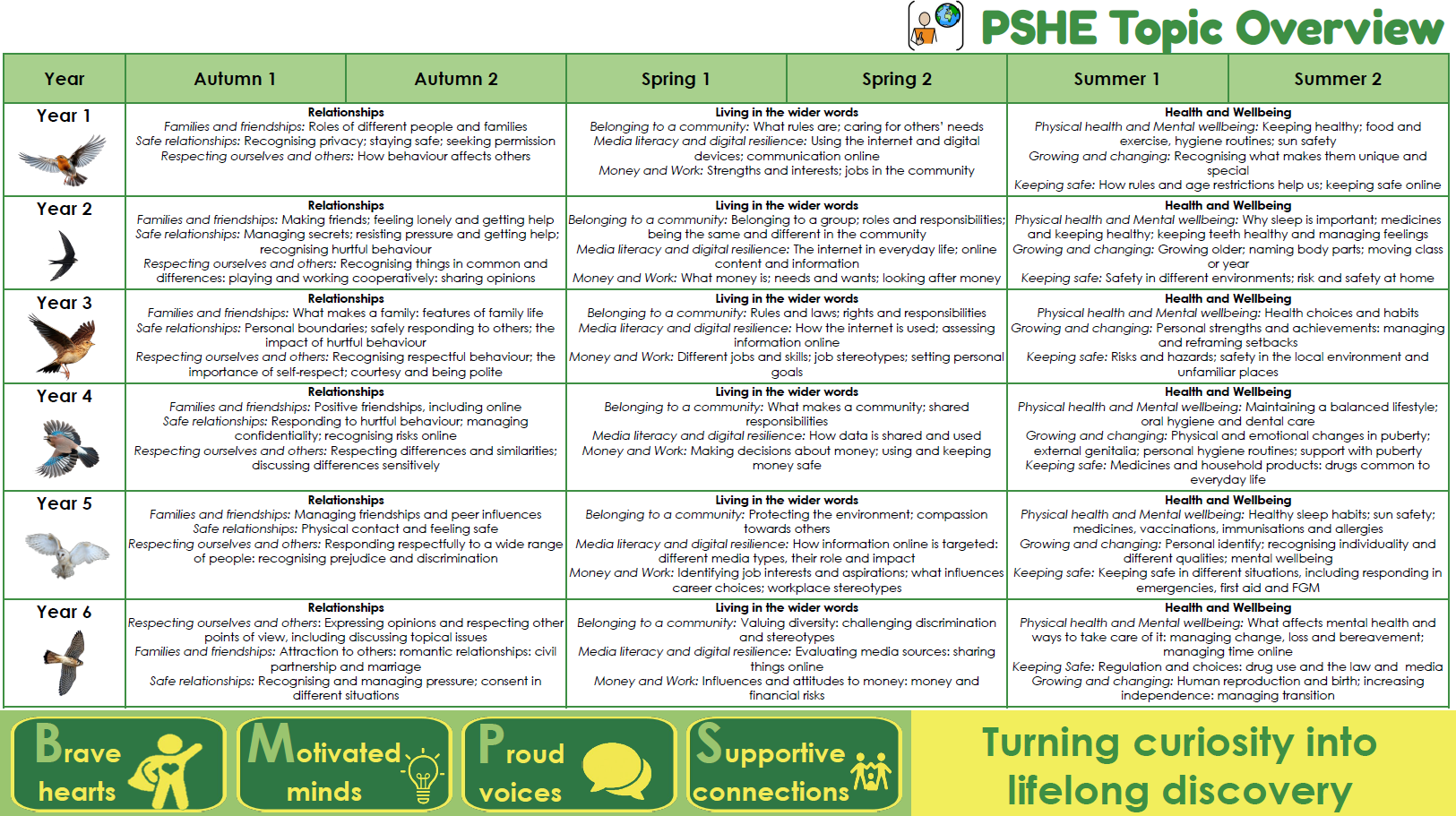
Our curriculum is based on the PSHE Association Programme Builder for Education (Thematic Model), which meets all statutory requirements as defined by the Department for Education.
The Programme of Study outlines structured learning opportunities across each key stage and is organised into three core themes:
- Health and Wellbeing – supporting pupils to understand physical and mental health, personal safety, and strategies for maintaining wellbeing.
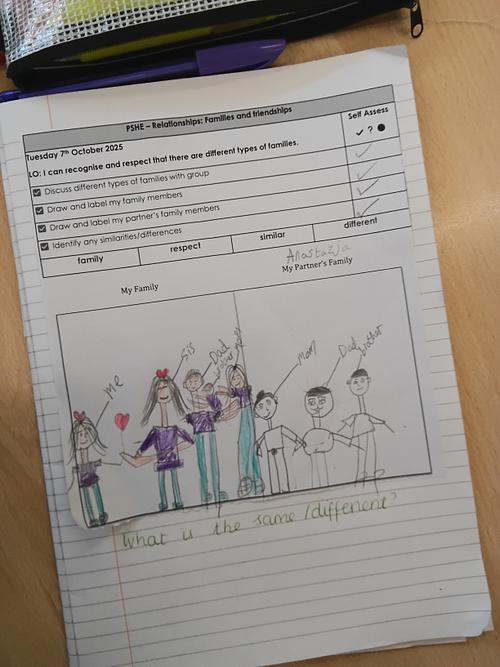
- Relationships – developing knowledge and skills to build positive, respectful relationships and understand families, friendships, and online interactions.
- Living in the Wider World – enabling pupils to understand their role within society, including economic wellbeing, careers education, and responsible citizenship.
These themes are delivered through a progressive and age-appropriate curriculum, ensuring pupils build knowledge, skills, and attributes that prepare them for life both now and in the future.
 Curriculum Impact:
The impact of our PSHE curriculum is reflected in pupils who are confident, respectful, and increasingly able to understand and manage their emotions, relationships, and personal wellbeing. Through a carefully sequenced and age-appropriate curriculum, pupils develop the knowledge, skills, and attitudes needed to thrive both within school and in the wider world.
By the end of each key stage, pupils are able to:
- Recognise and talk about their feelings using appropriate vocabulary and apply strategies to support their mental and physical wellbeing.
- Build positive friendships and demonstrate kindness, empathy, and respect towards others
- Understand how to stay safe, including online safety, personal boundaries, and seeking help from trusted adults
- Show increasing independence, responsibility, and confidence in making safe and healthy choices
- Understand their role within the school community and wider society, valuing diversity and inclusion
- Begin to develop aspirations and an understanding of the wider world around them.
Pupils’ progress is evident through discussion, reflection, pupil's voice, and everyday behaviours seen across school life. Teachers use formative assessment to adapt learning and ensure key knowledge and skills are embedded over time.
As a result, pupils leave primary school with strong foundations in emotional literacy, resilience, respect for others, and the confidence to transition successfully to secondary education and beyond.